

The Art Directors Club Germany (ADC) has published its University Creativity Ranking 2026. In the three-year ranking covering the period from 2024 to 2026, FH Salzburg once again secured first place with 194 points, successfully defending its top position from the previous year. It was also the only higher education institution to receive awards in all twelve creative disciplines.
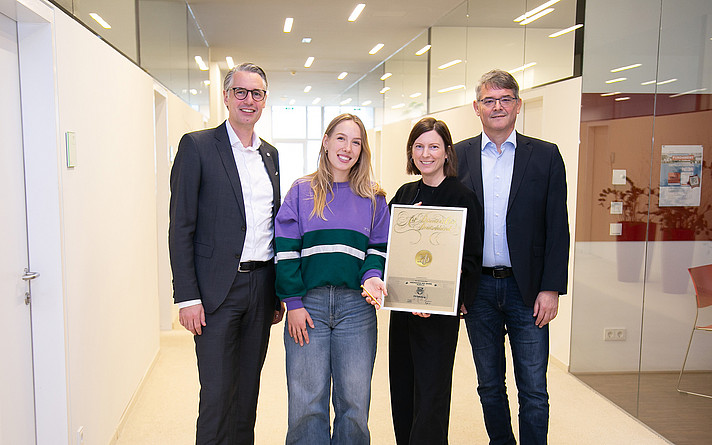
For the ADC University Creativity Ranking 2026 the ADC evaluated 729 awards from the ADC Talent Award between 2024 and 2026, earned by students from 59 universities in Germany and Austria. According to the ADC, the ranking is designed not only to show which university is the most successful, but also to highlight the specific areas in which each institution excels, making their creative strengths visible.
FH Salzburg ranks among the top three universities in seven of the twelve creative disciplines. Its strongest lead is in Communication Arts, the category for interdisciplinary work, where it achieved 41 points, almost twice as many as the second-ranked institution. The university also secured top positions in disciplines such as Storytelling, Extended Reality, and Motion Design. Even in Film and Sound, fields traditionally dominated by specialised film schools, FH Salzburg achieved third and second place, respectively. In its report, the ADC describes FH Salzburg as the institution with the “broadest profile in the entire dataset.” The result is equally striking in the Austrian context: of the 217 points awarded to Austrian higher education institutions, 194 points were earned by FH Salzburg.
“Being ranked number one in the ADC University Creativity Ranking for the second consecutive year is a tremendous recognition of our students and faculty. What particularly excites me about the new ranking is what it makes visible: our students excel conceptually, technically, and creatively alike. This is possible because they develop deep expertise in their chosen disciplines while also collaborating across disciplines in interdisciplinary projects,” says Hilmar Linder, Head of the Department of Creative Technologies.
“We own creativity.” The Department of Creative Technologies places creativity and the design of and with technology at the centre of its educational approach. Around 520 students work on hands-on, project-based, and interdisciplinary initiatives across the degree programmes MultiMediaArt, Code and Interactive Systems, Human-Computer Interaction, and Realtime Art & Visual Effects, combining cutting-edge digital technologies with aesthetics and functionality. Thanks to this unique blend of specialisation and interdisciplinary collaboration, graduates are highly sought-after professionals in the creative and digital industries.