

The Design & Product Management programme focuses on design, marketing and technology. Industry-specific knowledge in furniture, industrial or interior design is acquired as the programme progresses. Complementary course content teaches scientific, interdisciplinary, social and practical skills.
Deepen knowledge
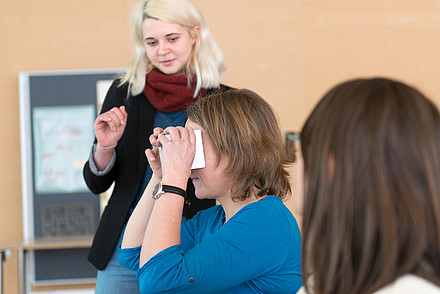
After acquiring basic skills in design, product-related materials technology, furniture and interior design, and creative project work in the first year of the bachelor's programme, students begin to learn industry-specific knowledge in furniture design, industrial design, or interior design in the third semester. The methods and working techniques, such as design thinking, are the same across all specialisation groups, but the standards and preferred CAD programmes differ. The choice of specialisation is not considered decisive for future careers; the most important thing is to acquire a good foundation in one discipline in order to be able to apply this knowledge to other industries in the future.
Overview of the three specialisation options:
Interior Design
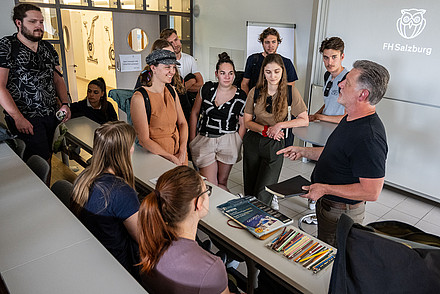
Interior Design in the Design & Product Management Degree Programme
The transition from a fossil-based, linear economic system to a circular society that operates within planetary boundaries and relies on renewable energy and resources is one of the major transformation processes of the 21st century. For this reason, future-oriented spatial development and circular economy principles are at the heart of the Interior Design specialisation within the Design & Product Management degree programme. From the use of innovative materials made from renewable raw resources to intelligent design and construction approaches, interior architecture is developed with a strong sense of identity.
With the support of research, we move from conceptual development towards exemplary real-world applications across numerous practice‑based questions. This constructive exchange with society fosters an understanding of interconnected systems and ultimately enables responsible decision-making. The quality of our built environment directly and indirectly influences our social, ecological and economic success factors.
Our work aims to inspire, inform and motivate the transformation of product and building culture towards circular material cycles. This gives us reason to hope for a design culture grounded in strong values – forming the foundation for professional practice in the dynamic field of interior architecture.
Core Areas of Study
- Designing surrounding spaces within the interplay of people and nature
- Pattern and spatial analysis: proportion, surface, and detail
- Design for residential spaces, office environments, retail, hospitality and exhibitions
- Competence in functional and aesthetic decision-making
- Legal and technical frameworks
- Concept development, planning and visualisation
- Model-making and prototype construction, with a wide range of 3D printing technologies available
- Lighting design, illumination and acoustic design
- Presentation techniques
- Strong practical relevance through collaboration with real clients and authentic design briefs
- Individual and team work on real-life projects and participation in workshops
- Industry engagement through Design Dialogues at the Kuchl Campus
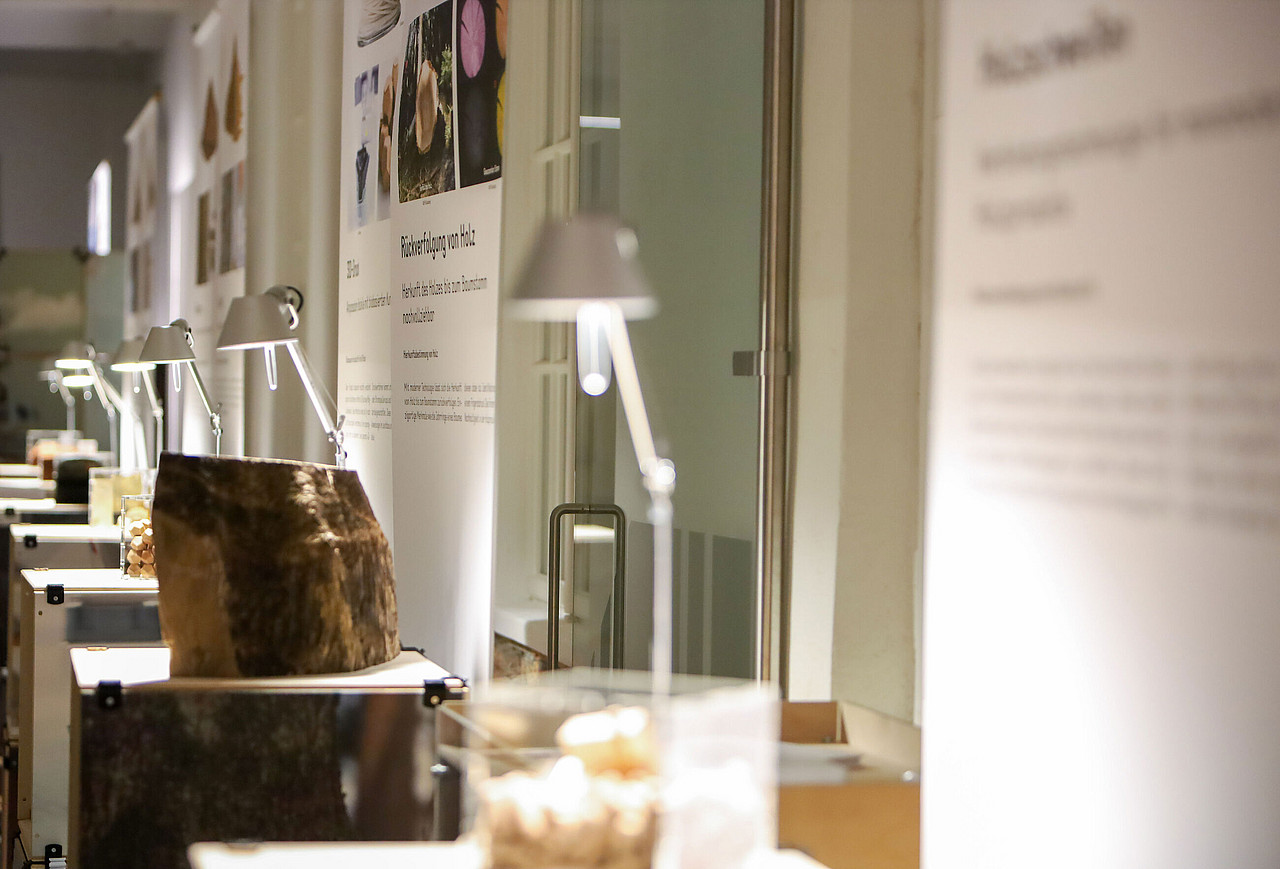
- Material expertise supported by research capabilities on campus
- Material and model collections serving as inspiration and decision-making tools
- A professional network connecting students with companies, studios and alumni in interior architecture
- International excursions and workshops within the thematic field
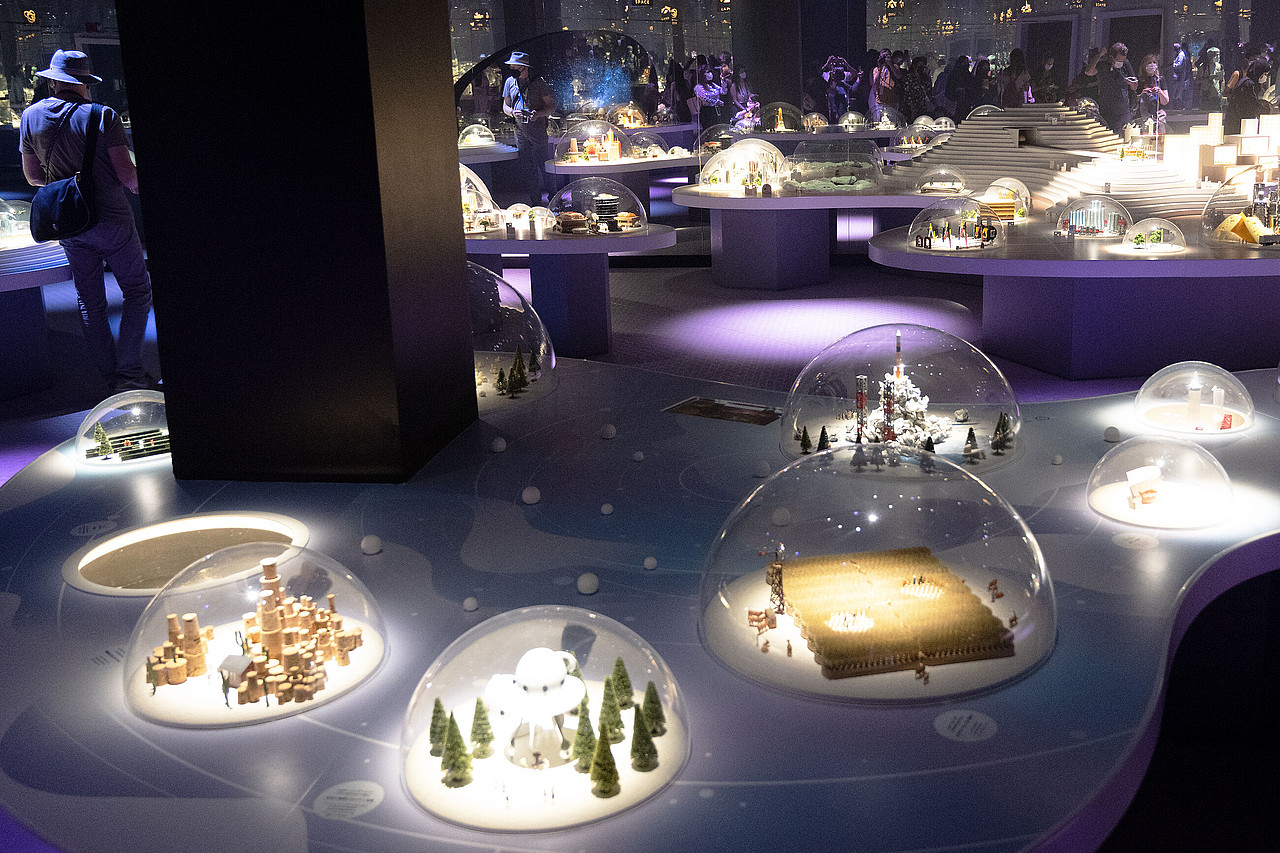
- Exhibitions, awards and prizes that showcase the range and excellence of student achievements

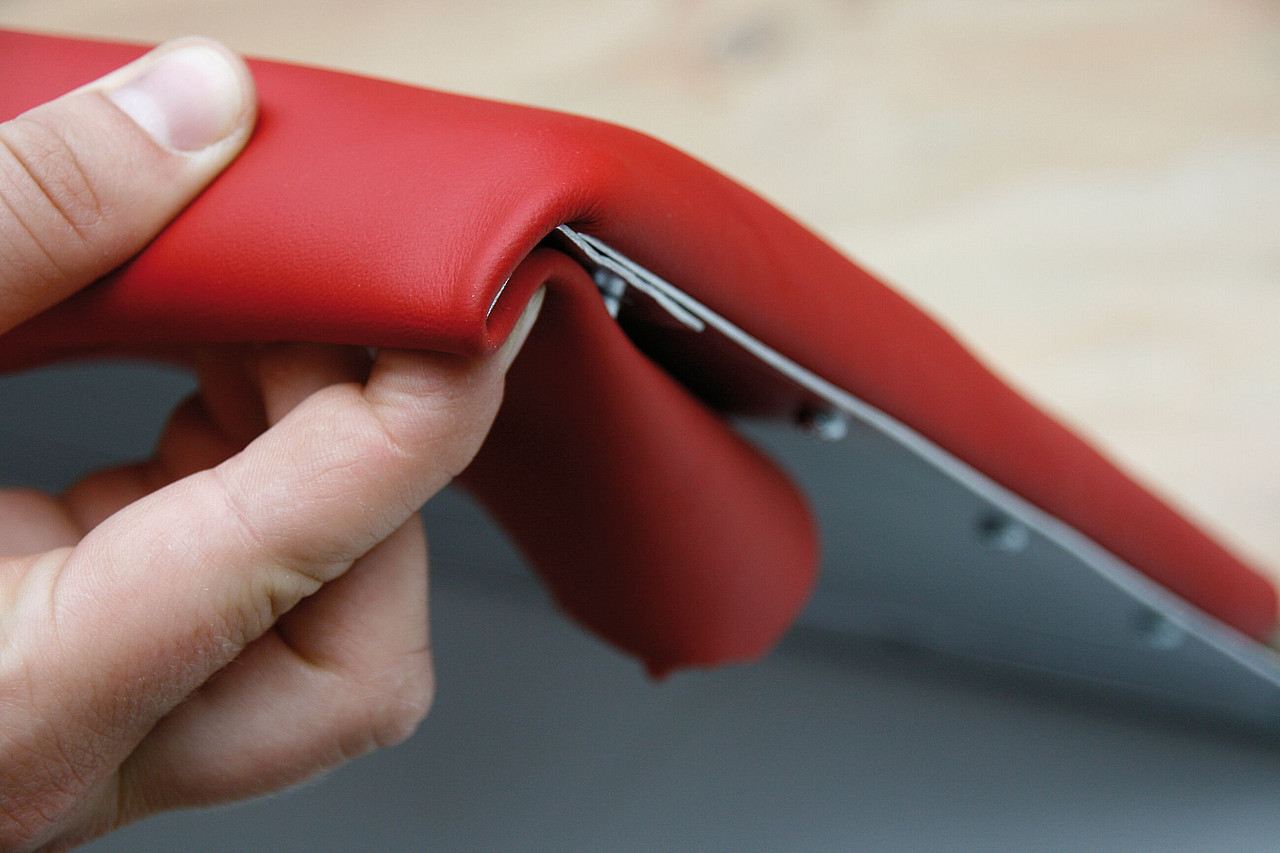


Furniture design
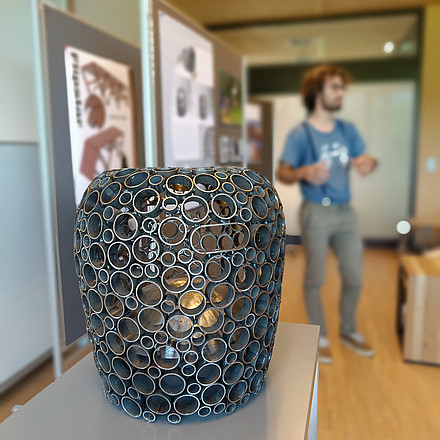
Furniture design focuses on the aesthetic and functional development of furniture pieces. It encompasses not only their outward appearance but also material selection, ergonomics, usability, sustainability, and innovation.
Core elements of furniture design
- Aesthetics:
The visual aspects of design – forms, colours, surfaces, and stylistic directions (e.g., minimalist, Scandinavian, industrial). - Functionality:
Furniture must fulfil its intended purpose – for example, providing storage, offering comfort, or being used flexibly. - Materials:
Wood, metal, plastics, glass, textiles – chosen according to the design concept and area of application. - Construction:
Traditional and contemporary joining techniques and methods used to combine components and materials. - Ergonomics:
Especially important for seating and work environments – furniture should support the body and enable healthy posture. - Sustainability:
Environmentally friendly materials, durable construction, and resource-efficient production processes are essential. - Innovation:
New technologies, modular systems, or smart features (e.g., integrated lighting or charging functions).
Designers create furniture for a wide range of contexts – from private living spaces and offices to public facilities. They often work in interdisciplinary teams with architects, interior designers and manufacturers. Additionally, mass-produced furniture must align with a brand’s core values and fit seamlessly into its existing product portfolio. Such pieces are often offered as part of a collection where, for instance, a dining chair, bar stool and side table share a coherent aesthetic language to create a harmonious interior environment.
Industrial Design
Industrial Design shapes the future of our everyday lives.
Every tool used by people, every mobility solution, and nearly every leisure activity is based on the interaction between humans and products. Developing products that are sustainable, functional, aesthetically refined, economically viable and emotionally engaging – this is the essence of Industrial Design.
Contrary to what the often simplified term “design” might suggest, Industrial Design involves far more than the external appearance of a product. At its core lies the creation of genuine progress: developing solutions that meet the needs of current and future generations. The goal is not innovation for its own sake, but responsible advancement that improves our lives in meaningful and lasting ways.
Industrial Design goes beyond the product itself. Professional practice includes embedding a product within a coherent service and user experience. A product only becomes truly successful when the entire usage context – from the first interaction to long‑term operation – is considered from the outset of the development process. This benefits everyone: users, manufacturers, distributors and service partners – and, not least, our global environment.
Industrial Design is both a demanding and deeply rewarding discipline. Those who choose this profession actively shape the world of tomorrow. Every day. With creativity, responsibility and the desire to make things better for people.
Expand portfolio
To make you more competitive and facilitate your path to an international career, the programme includes a compulsory elective subject, Communication Portfolio, starting in the third semester. Here you can choose a second foreign language or deepen other knowledge and skills.
The following languages are offered as second foreign languages:
- Spanish
- Italian
- Swedish